Today, as technology advances at a rapid pace, traditional “textbook-style” museum exhibitions are undergoing a profound transformation. How can we make silent artifacts “speak” and allow visitors to tangibly connect with history? The digital upgrade at the Capital Museum of China in Beijing provides a stunning answer.
Moving away from traditional models reliant on text descriptions and static displays, this upgrade introduces a series of innovative technologies including naked-eye AR, digital films, and multi-screen projection. Among these, a standout piece of technology—the LED Holographic Invisible Screen—has become the centerpiece of the transformation. This technology is provided by the M-Series product from MUXWAVE.
The Challenge: How to Infuse “Dynamic Soul” into Artifacts Without Disrupting the Space?
The core challenge for the Capital Museum was that any addition of display technology within its precious historical halls needed to be extremely discreet. Traditional screens or projection screens often obstruct views, compromise the spatial openness, and create a disconnect between “technology” and “history.”
The museum required a display medium that could not only carry dynamic digital content but also perfectly “disappear” into the environment, achieving a seamless fusion of technology and culture.
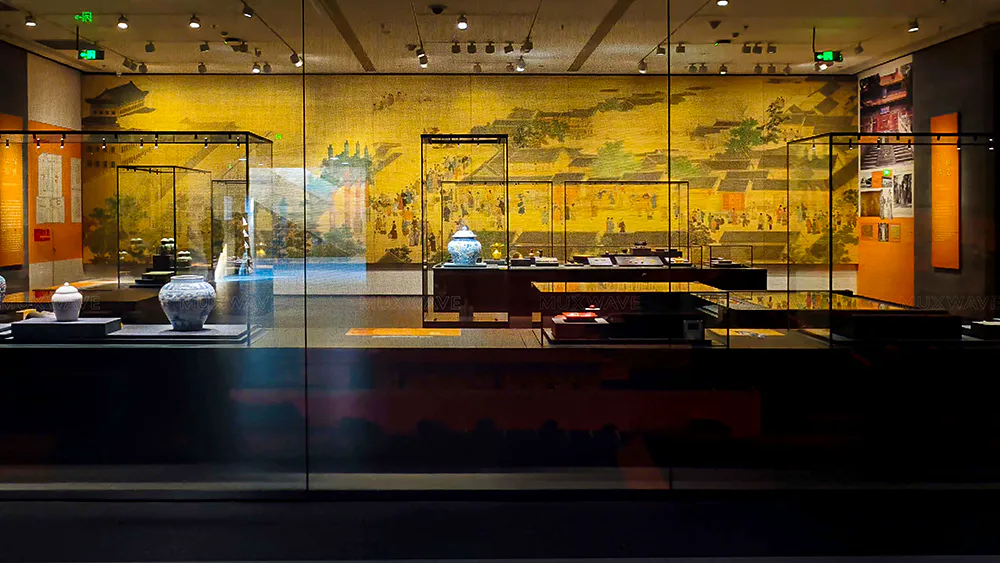
The Solution: MUXWAVE M-Series Holographic Invisible Screen, Turning Glass into a “Magic Canvas”
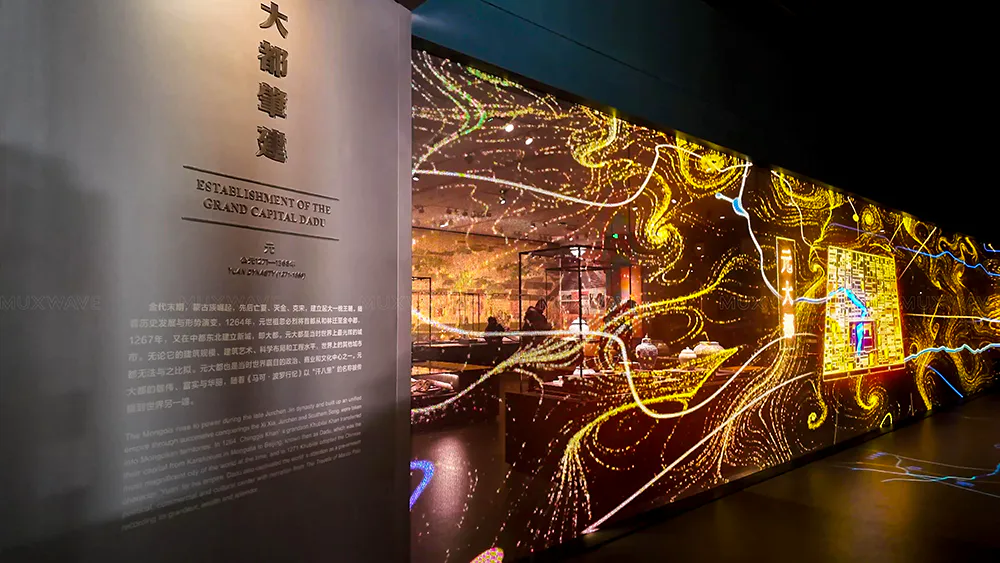
In the museum’s main exhibition hall, the visual focus is a 16-meter-long central axis sand table. The solution lies on the glass facade adjacent to this sand table.
- Core Technology: The MUXWAVE M-Series LED Holographic Invisible Screen was installed, with a pixel pitch of P6.25.
- Scale: The screen covers a total area of over 70 square meters, seamlessly applied to the glass surface.
- Core Effect: When inactive, the screen functions as highly transparent glass, not obstructing the view of artifacts or visitors at all. When content is displayed, high-definition historical images appear to “float” on the glass, creating a remarkable naked-eye AR stereoscopic effect in conjunction with the real sand table and space behind it.
Three Breakthrough Advantages of This Technology:
- Ultra-HD Transparent Display: It maintains over 90% visual transparency while delivering high-brightness, high-contrast imagery, ensuring clarity and vibrancy even in the museum’s bright lighting.
- “Zero” Space Occupation: With a thickness of only a few millimeters, the screen is directly attached to the existing glass without requiring structural changes, perfectly preserving the original exhibition space and historical ambiance.
- Immersive Storytelling: Historical maps, dynamic footage, and restoration animations related to the artifacts can “hover” around the objects themselves, creating an immersive context that transforms information delivery from “reading” to “experiencing.”
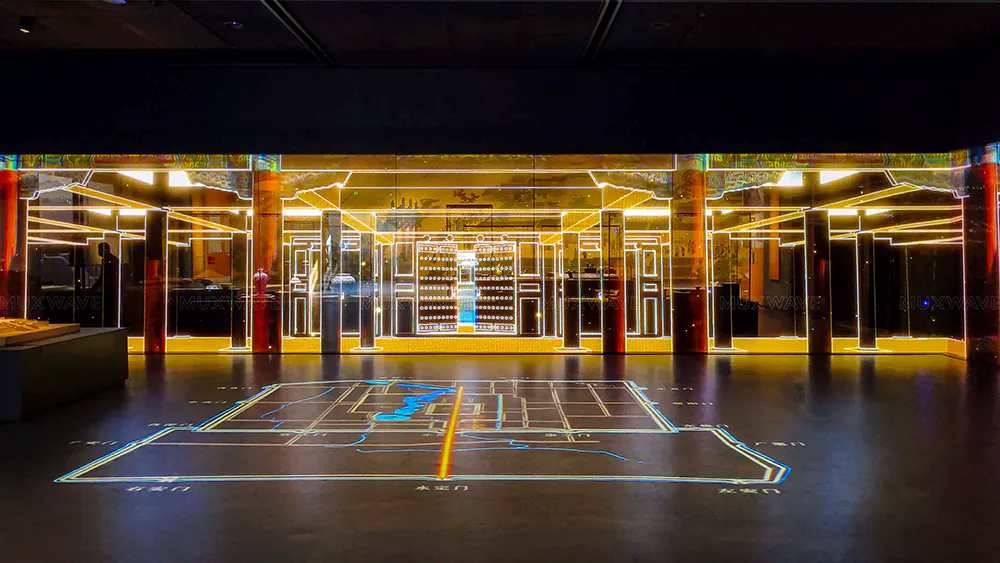
The Result: Redefining the Visitor Journey from “Viewing” to “Experiencing”
This application has revolutionized the visitor experience:
- For Visitors: History transforms from flat text and images into a perceptible, interactive three-dimensional narrative. Without any additional devices, visitors can see historical scenes “come to life,” significantly enhancing engagement, understanding, and dwell time.
- For the Museum: Without moving artifacts or disturbing the space, it greatly expands information capacity and narrative power. This effectively responds to the national cultural strategy of “bringing cultural relics to life,” setting a benchmark for museum digital transformation.
- For the Industry: The Capital Museum’s case successfully demonstrates that transparent display technology is one of the optimal solutions for digitizing historical spaces, providing a clear new direction for the future design of memorial halls, science museums, and thematic exhibition halls.
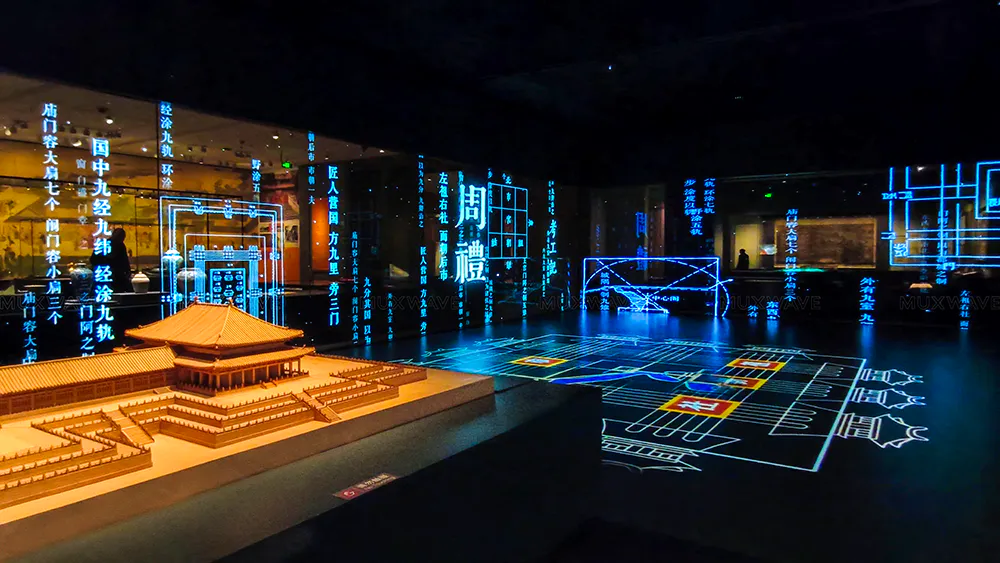
The Future: MUXWAVE Transparent Display Technology Empowering Cultural Digitization
The practice at the Capital Museum fully proves that true technology is humble and intelligent. It should not overshadow but, like the MUXWAVE Holographic Invisible Screen, act as an “invisible window” gently connecting the past and present, physical objects and digital content, history and the audience.
As emphasized, the goal is to “make cultural relics speak and bring history to life.” Through innovative products like the M-Series Holographic Invisible Screen, MUXWAVE provides solid technological support for achieving this goal, driving more cultural spaces toward a future of deep digitization and immersive experiences.
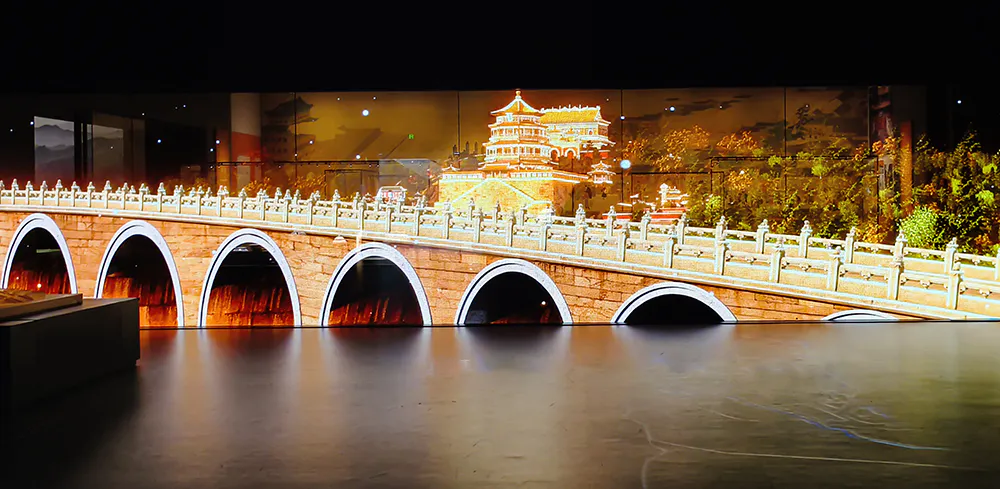
Delivering Value for You
MUXWAVE specializes in transparent display technology innovation. Its M-Series products are widely used in museums, commercial exhibition halls, retail windows, and more. If you are planning a digital exhibition, cultural tourism upgrade, or innovative commercial space project, please feel free to contact us for a customized transparent display solution.