A New Chapter in Architectural Digitization: How muxwave LED Holographic Invisible screen is Reshaping Bank Space Experiences
In the digital age, architecture is no longer just static physical space but a medium for information, interaction, and brand experience. Recently, Westpac Banking Corporation made a landmark move at its new flagship branch in Wellington, New Zealand—transforming an entire curved glass facade into a holographic screen surface that “invisibly coexists” with its environment.
This achievement is powered by another successful application of muxwave LED Holographic Invisible screen in the financial architecture sector. This case study delves into how this technology addresses the challenge of integrating traditional displays with building structures and explores its broad application potential.

1. The Challenge: How to Make a Screen “Disappear” on a Curved Facade?
Westpac’s Wellington branch is located on the bustling Lambton Quay, featuring a modern curved glass facade that defines the building’s aesthetic. The bank aimed to add dynamic digital display capabilities to this facade without compromising natural light, visibility, or architectural integrity.
Traditional solutions faced two major pain points:
- Structural Conflict: Installing external screens or significantly altering the facade is costly and disrupts the building’s design.
- Visual Obstruction: Conventional films or internal displays block views and light, making spaces feel enclosed.
2. The Solution: Breakthroughs in Flexible Integration and HD Transparency
To address these challenges, the project team selected muxwave’s M Series LED Screen Panels , whose core advantages perfectly met all requirements:
- Flexible and Bendable for Seamless Curved Facade Integration
Through precise calculation of the glass curvature, the custom LED modules conform perfectly to the curved glass surface, delivering a smooth display that is nearly invisible from a distance. - Non-Invasive Installation Preserves Building Structure
Utilizing a unique adhesion-based installation method, it requires no drilling, welding, or alterations to the original glass facade, maximally protecting the building structure and simplifying the installation process. - Balancing High Transparency with High-Brightness Display
This is the essence of the technology. After installation, this 45-square-meter invisible screen achieves:- From the front (outside): Crisp, high-brightness imagery with vibrant colors, clearly visible even in daylight, perfectly suited for displaying financial information, brand promotions, and more.
- From the inside looking out: Over 90% visual transparency, with minimal impact on natural light and outside views. The interior remains bright, open, and connected to the exterior environment.
3. The Result: A Silent Dialogue Between Digital Content and the Built Environment
Ultimately, this “breathing display” brings the building facade to life. By day, it elegantly recedes behind the glass. When activated, it instantly transforms into a vast digital canvas for dynamic content, becoming a vibrant window that connects the bank with passersby and communicates a sense of technological sophistication.
It is no longer an obtrusive “device” but an integral part of the building’s materiality, realizing the integrated concept of “display as architecture, architecture as display.”
4. Industry Application: Why is the Finance Sector Embracing Holographic Invisible Displays?
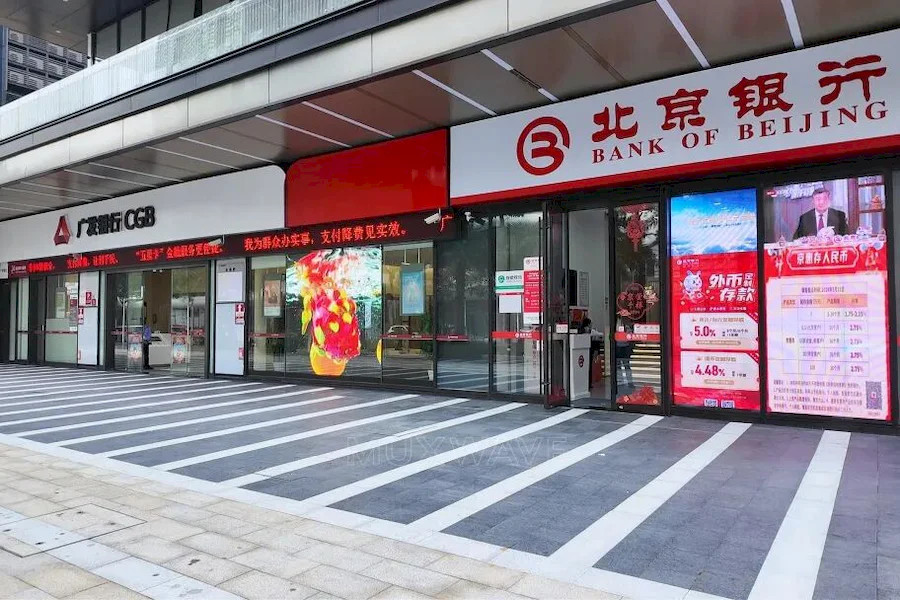
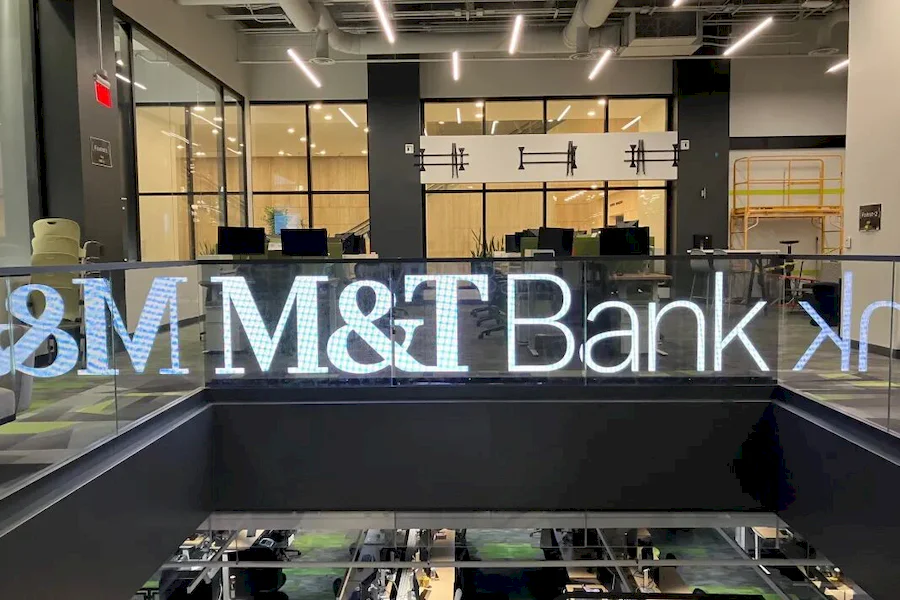
The Westpac project is not an isolated case. Prior to this, muxwave’s technology has been deployed at BMO Bank (Canada), M&T Bank (USA), China Guangfa Bank, Agricultural Bank of China, and other global financial institutions. The finance sector’s preference stems from three core value propositions:
- Building a Tech-Forward Brand Image: The futuristic display method powerfully enhances the bank’s innovative and premium brand perception.
- Maximizing Space Value: It transforms underutilized glass surfaces into high-value communication points without sacrificing precious light and views.
- Enhancing Customer Experience: It presents service introductions, financial news, exchange rates, and other information in a more vivid and engaging way.
5. The Future is Here: muxwave’s Holographic Invisible Display in Diverse Scenarios
As a pioneer in holographic LED invisible display technology, muxwave has developed a comprehensive product matrix, with applications extending far beyond finance:
- Commercial Media: Atriums, storefronts, creating stunning yet transparent advertising media walls.
- Retail & Showrooms: Elevating brand store aesthetics with a high-tech feel, enabling blended physical-virtual product displays.
- Digital Culture & Tourism: Overlaying interactive information on museum or scenic spot glass cases without disrupting artifacts or views.
- Corporate Headquarters: Creating iconic, intelligent building facades with high brand recognition.
Conclusion
muxwave’s successful project at Westpac in New Zealand demonstrates that true technology is invisible—it serves the experience and blends into the environment. As urban spaces accelerate their digital transformation, this invisible display technology—which balances display functionality, architectural aesthetics, and spatial experience—is poised to become a standard feature in future smart buildings and commercial displays.