Walk into a car dealership built before 2015 and you know the formula: rows of vehicles under fluorescent lights, some posters on the wall, a coffee machine in the corner. It worked. Until it didn’t.
The way people buy cars has changed. A lot. Most buyers do 60% of their research online before ever stepping into a showroom. When they do show up, they’ve already compared specs, watched reviews, and probably narrowed their choice to two or three models. The showroom isn’t where they learn about the car anymore — it’s where they decide if the brand feels right.
That shift is forcing dealerships and automakers to rethink their physical spaces. And one of the tools gaining real traction is the 透明LEDスクリーン.
What a transparent LED screen actually does in a showroom
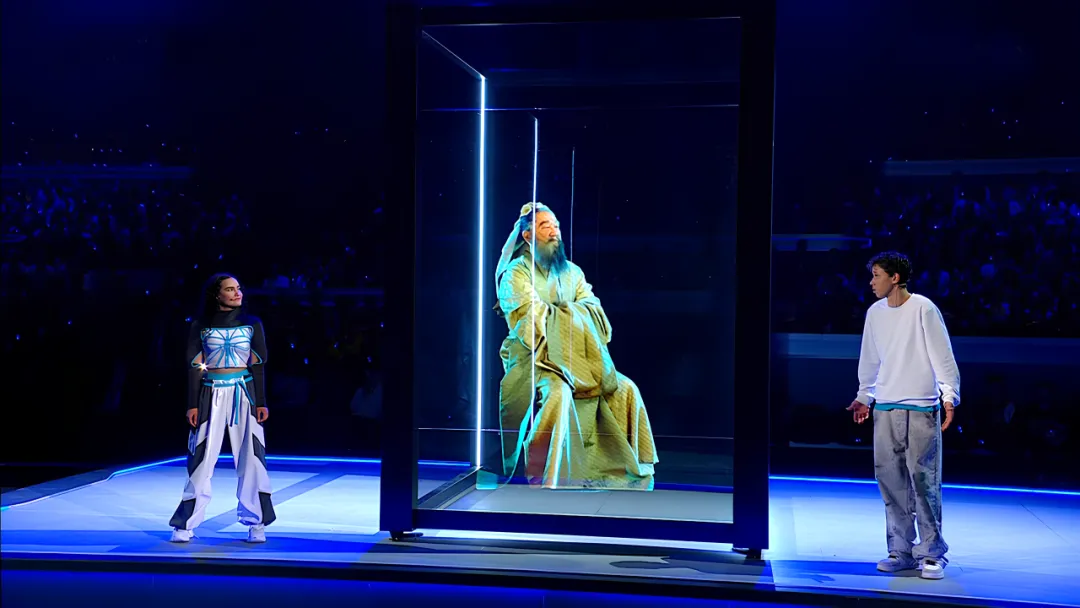
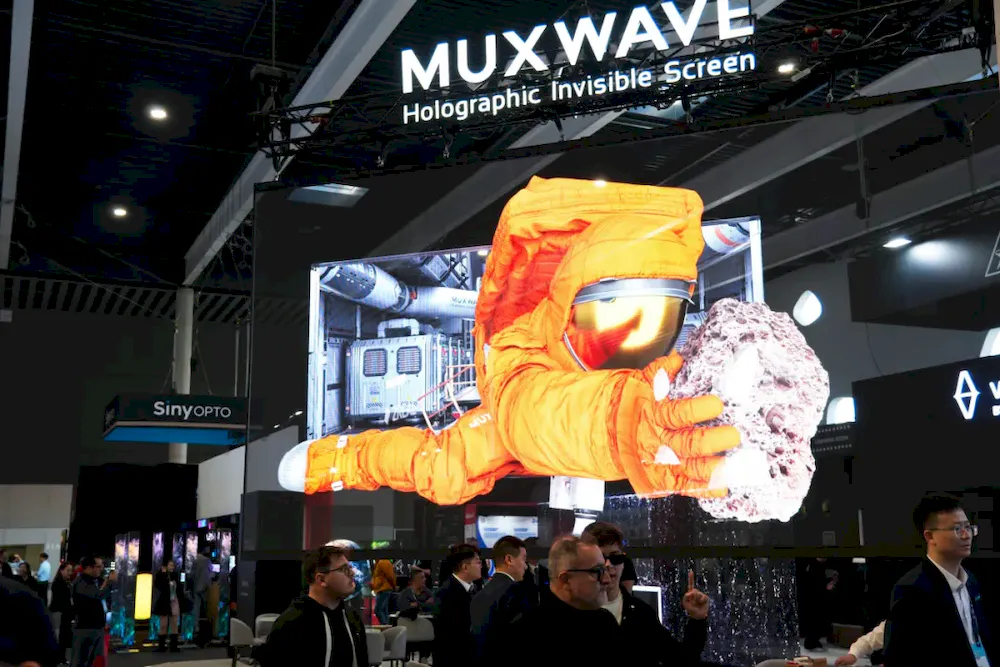
A transparent LED screen is exactly what it sounds like: a display panel built with LED strips spaced apart, letting light and visibility pass through the gaps. When it’s off, you see through it. When it’s on, it shows video, animations, or static content at high brightness — bright enough to compete with sunlight coming through a glass facade.
Most panels on the market today offer 70% to 95% transparency. The higher-end models hit 5,000 nits or more, which matters because car showrooms are full of glass and natural light. A regular indoor screen at 500 nits would look washed out. At 5,000 nits, the image stays punchy even at noon.
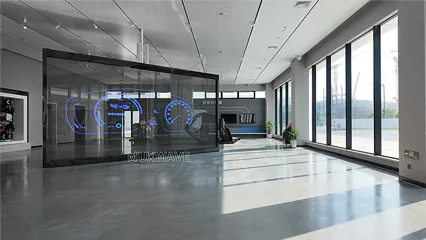
For dealerships, this opens up display possibilities that weren’t practical before. You can turn floor-to-ceiling glass walls into digital canvases without blocking the view of the cars inside — which is, after all, the whole point of glass-fronted showrooms.
Where should it be installed?
I’ve looked at about a dozen real installations, and the pattern is pretty consistent. Here’s where transparent LED screens show up most often in automotive settings.
The street-facing facade
This is the most common use case, and for good reason. A dealership’s glass frontage is its biggest marketing asset — thousands of people drive or walk past it every day. A transparent LED screen on that glass turns a passive window into an active billboard.
The difference from a regular LED billboard: during the day, passersby still see the showroom cars through the screen. At night, when interior lights are on, the display content floats against a lit backdrop. One dealership group in Guangzhou installed an 18-square-meter transparent screen on a Honda showroom facade. The content cycles between new model launches, promotional offers, and brand videos. The screen stays on year-round without blocking the view inside.
Internal glass partitions
Most modern dealerships use a lot of glass inside — between the showroom floor and service area, between waiting lounges and display zones, between different brand sections in multi-franchise operations.
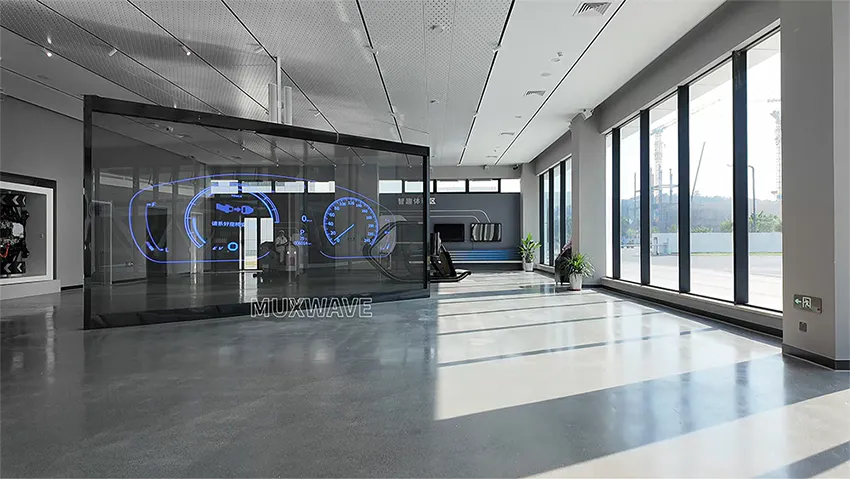
Putting transparent screens on these partitions lets dealers run different messages in different zones without cluttering the space with standalone displays. A customer waiting for service can watch brand content on the partition glass while still seeing their car through it. It’s subtle. Nobody feels like they’re being advertised at.
The EV corner
This one is newer, and I think it’ll grow fast. Electric vehicles need a different kind of sales pitch. Range anxiety, charging infrastructure, battery technology — these things are easier to explain with visuals than with words. A transparent screen behind an EV lets a salesperson walk a customer through range maps, charging networks, and internal component animations while the car sits right in front of them.
Some brands are taking it further. At a concept store in Seoul, a transparent screen creates a “floating” effect around the vehicle on display, with technical specs and driving footage appearing to hover in the air around the car. It stops people in their tracks. The store reported a 40% increase in walk-in traffic in the first month — though to be fair, some of that was probably novelty effect.
Service and delivery areas
This one is underrated. The service waiting area is where customers spend the most time in a dealership, and it’s usually the most boring part. A transparent screen on the glass wall between waiting lounge and workshop can show brand content, service progress updates, or just something interesting to look at. It turns dead time into brand time.
For delivery bays — the “reveal” moment when a customer picks up their new car — a transparent screen can broadcast a personalized welcome message or play a brand film as the car is unveiled. It costs very little but people remember it.
The numbers that matter
Talk to dealers who’ve installed transparent LED screens and the same benefits keep coming up:
Foot traffic goes up. When the facade does something visually interesting — dynamic content, not static posters — more people notice. One dealership tracked a 25% increase in unscheduled walk-ins after installing a transparent facade screen.
Dwell time increases. Customers stay longer when there’s content to engage with. Longer visits mean more conversations, more test drives, more sales opportunities.
Brand perception shifts. A dealership that looks like a tech company’s retail store sends a different message than one that looks like a warehouse with cars in it. For luxury and EV brands especially, that matters.
Content is free to update. Once the screen is installed, changing the message costs nothing. New model launch? Push new content. Weekend sales event? Push new content. No printing, no installation crew, no ladder required.
What to look for when buying
If you’re evaluating transparent LED screens for a dealership, here’s what to pay attention to:
Brightness. Car showrooms are bright environments. Look for at least 4,000 nits if the screen faces direct sunlight. 5,000+ is better.
Transparency rate. Higher is generally better, but the trade-off is pixel pitch. At 90% transparency, you get a coarser image. At 70%, you get sharper resolution but more obstruction. For facade applications, most dealers go with 80-90% — the content is viewed from a distance, so pixel-level sharpness matters less.
Pixel pitch. This is the distance between LED clusters, measured in millimeters. P3.9 (3.9mm pitch) is common for indoor use. For large facades viewed from 5+ meters away, P6 to P10 works fine and costs less.
Installation method.LED film screen can be easily attached to the existing glass. While other screens use a frame system. The use of film bonding method is faster and does not cause damage to the glass.Or use the 吊り下げ式LEDスクリーン to suspend the entire screen in the air, creating a more powerful visual impact.Of course, if you want quick installation and easy mobility, you can also use the 透明LEDキオスク. It supports seamless left-to-right splicing and enables rapid deployment of large-scale transparent display systems.
Power consumption and heat. Transparent LEDs run cooler than traditional LED cabinets because the strips are spaced apart with airflow between them. But it’s still worth checking the specs, especially for large installations in warm climates where cooling costs add up.
Control system. You want the ability to update content remotely, schedule playback, and ideally integrate with your existing digital signage software. Cloud-based control is standard now — if a vendor doesn’t offer it, look elsewhere.
Things to watch out for
A few mistakes I’ve seen repeated:
Putting too much text on the screen. Facade screens are viewed from a distance, often at an angle, through glass. Complex layouts and small text don’t work. Big visuals, bold colors, short messages.
Running the same loop for months. The whole point of digital is that content is changeable. If the screen shows the same three slides for a year, you’d have been better off with printed graphics.
Ignoring nighttime content strategy. At night, the showroom interior lights make the screen pop differently. Content that looks great during the day might look harsh or overbright after dark. Schedule day and night playlists separately.
Skipping maintenance planning. Transparent LED screens are reliable, but pixels do fail. Make sure your warranty covers dead pixel replacement and that someone on your team knows who to call.
Why now is a good time to look at this
Three things are converging:
First, the technology has matured. Five years ago, transparent LED was expensive, dim, and unreliable. Today it’s bright enough for sunlit facades, stable enough for 24/7 operation, and the price has dropped by roughly half since 2021.
Second, automotive retail is restructuring. Direct-to-consumer sales models, EV-only showrooms, brand experience centers — the physical dealership is being reimagined across the industry. Every new build and renovation is an opportunity to integrate display technology from the start rather than bolting it on later.
Third, the content ecosystem has caught up. It used to be that dealers bought a screen and then had no idea what to put on it. Now there are agencies, freelancers, and AI tools that can generate showroom content for a few hundred dollars a month. The content problem isn’t really a problem anymore.
For dealers planning a renovation or a new build, it’s worth including transparent LED in the discussion early — ideally at the architectural design stage. Retrofitting later costs more and never looks as clean.