
Einleitung: Warum Visual Merchandiser das Schaufenster überdenken
Wenn Sie heute an einem Flagshipstore auf der Fifth Avenue, den Champs-Élysées oder der Orchard Road vorbeigehen, werden Sie feststellen, dass sich etwas verändert hat. Die statischen Schaufensterpuppen teilen sich ihren Platz mit schimmernden, schwebenden Bildern, die in der Luft zu schweben scheinen - oder geben ihn in einigen Fällen sogar auf. Das ist transparente LED-Anzeigetechnik bei der Arbeit, und es entwickelt sich still und leise zum störendsten Werkzeug im Werkzeugkasten des modernen Visual Merchandisers.
Die meisten Leitfäden über transparente LED-Bildschirme sind jedoch für Ingenieure und Beschaffungsbeamte, nicht für die Kreativprofis, die tatsächlich entscheiden, was im Schaufenster einer Marke zu sehen ist. Dieser Leitfaden ist anders. Ob Sie ein Visual Merchandiser (VM), ein Innenarchitekt im Einzelhandel oder ein Brand Experience Director, Auf dieser Seite finden Sie das praktische und entscheidungsrelevante Wissen, das Sie benötigen, um transparente LED-Anzeigen zu bewerten und sicher einzusetzen.
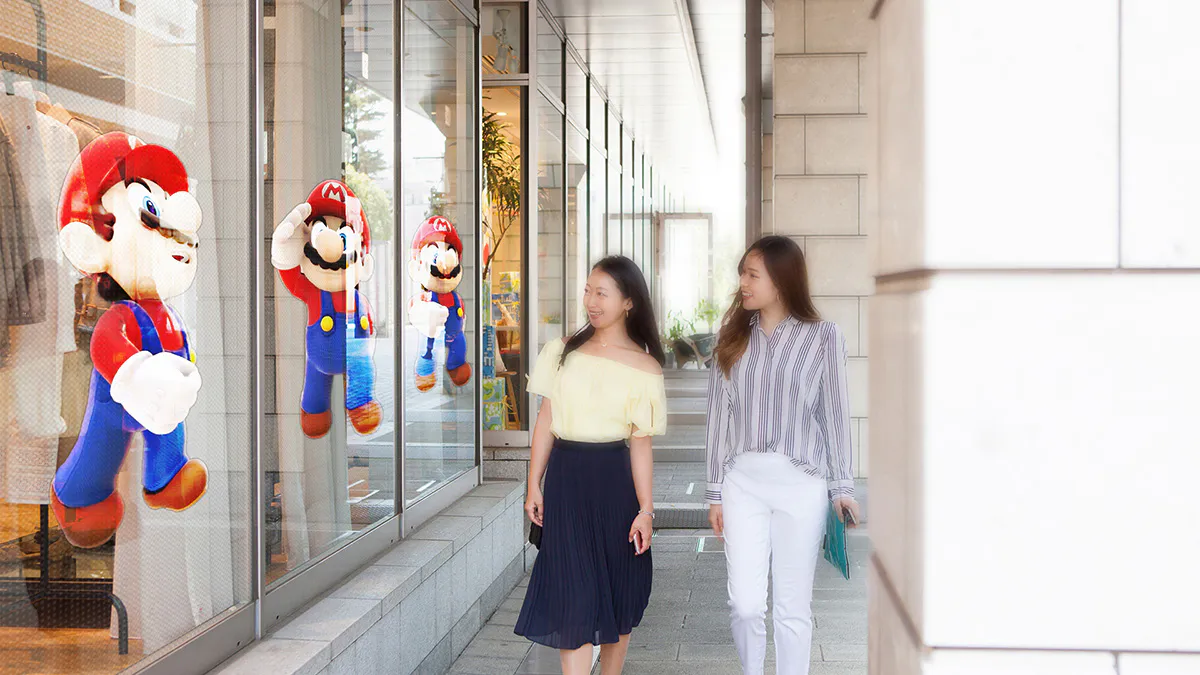
Was ist eine transparente LED-Anzeige, und warum ist sie für das Visual Merchandising von Bedeutung?
Eine transparente LED-Anzeige ist ein Bildschirm, der aus einzelnen LED-Modulen besteht, die in einem gewissen Abstand zueinander angeordnet sind, so dass das Licht - und die Sichtbarkeit - durch das Paneel hindurchgehen kann und dennoch ein helles, vollfarbiges Bild erzeugt. Anders als bei einer herkömmlichen LCD- oder massiven LED-Wand können die Kunden sehen über den Bildschirm auf die Produkte oder den Raum dahinter.
Für Visual Merchandiser ist dies die Lösung eines Problems, das seit Jahrzehnten besteht: Digital Signage konkurriert immer mit Handelswaren. Ein herkömmlicher Bildschirm versperrt die Sicht auf die Produkte, reduziert das natürliche Licht und schafft eine “digitale Wand”, die die Marke von ihrer Schaufensterpräsentation trennt. Transparente LED beseitigt diesen Kompromiss.
Die wichtigsten VM-Vorteile auf einen Blick:
| Nutzen Sie | Was das für Ihr Fenster bedeutet |
|---|---|
| 70-97% Transparenz | Die Kunden sehen Produkte UND dynamische Inhalte gleichzeitig |
| Bis zu 5.000 nits Helligkeit | Sichtbar in direktem Sonnenlicht ohne Ausbleichen |
| Modulares, rahmenloses Design | Passt zu jeder Fensterform und -höhe ohne dauerhafte Veränderung |
| Inhalt umschaltbar | Kreative 24/7 ändern - kein Neudruck, kein Montageteam |
| Minimale strukturelle Belastung | Keine Notwendigkeit, die Verglasung zu verstärken oder einen Bauauftrag neu auszuschreiben |
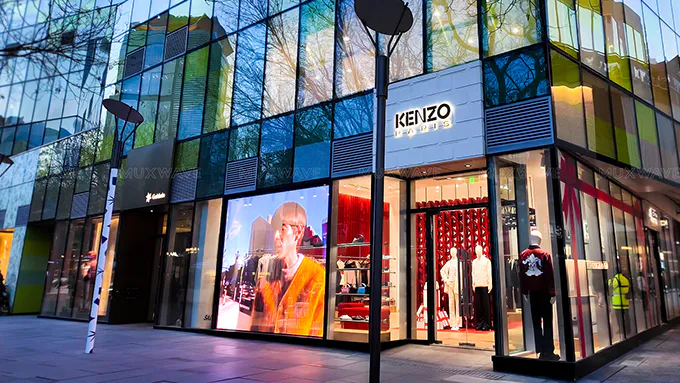
Der Entscheidungsrahmen des Visual Merchandisers: 5 Fragen bevor Sie spezifizieren
Bevor Sie einen Anbieter anrufen, sollten Sie diese fünf Fragen klären. Sie werden bestimmen, welches transparente LED-Produkt für Ihre spezifische Einzelhandelsumgebung geeignet ist.
1. Was ist Ihr primärer Betrachtungsabstand?
Dies ist die wichtigste Entscheidung über die Spezifikation, und sie bestimmt Auswahl des Pixelabstandes.
- Pixelabstand = der Mittenabstand zwischen den LED-Clustern (gemessen in Millimetern)
- Je kleiner der Abstand, desto schärfer das Bild im Nahbereich - und desto höher die Kosten
Praktische Faustformel:
| Betrachtungsabstand | Empfohlener Pixelpitch | Typische Anwendung |
|---|---|---|
| 1-3 m (z. B. Fußgängerweg) | P3.9 - P5.9 | Schaufenster auf Straßenebene |
| 3-8 m (z. B. Atrium oder Eingangshalle) | P7.8 - P10 | Interne Anzeige in einem Einkaufszentrum |
| 8 m+ (z. B. Gebäudefassade) | P15+ | Architektonische Medienfassade |
Für die meisten Marken-Flaggschiff-Fenster in einer Einkaufsstraße, a P3.9 bis P5.9 transparente Platte liefert den Fußgängern ein klares Bild bei gleichzeitig hoher Transparenz.
? Profi-Tipp: Übertreiben Sie es nicht mit dem Pixelabstand. Ein Wechsel von P5,9 zu P3,9 kann die Kosten für den Bildschirm um 40-60% erhöhen, aber wenn Ihr Fenster auf einen breiten Bürgersteig ausgerichtet ist, stehen die Kunden selten nah genug, um den Unterschied zu bemerken.
2. Wie viel des Fensters wollen Sie tatsächlich abdecken?
Transparente LED gibt es in zwei primären Installationsformaten für den Einzelhandel:
A) Vollverglasung - Das LED-Panel deckt die gesamte Glasfläche vom Boden bis zur Decke ab. Dies sorgt für eine maximale visuelle Wirkung und ist ideal für Luxusmode, Automobilausstellungsräume und Vorzeige-Schönheitsmarken. Transparenzraten von 75-92% sorgen dafür, dass die Produkte im Inneren sichtbar bleiben.
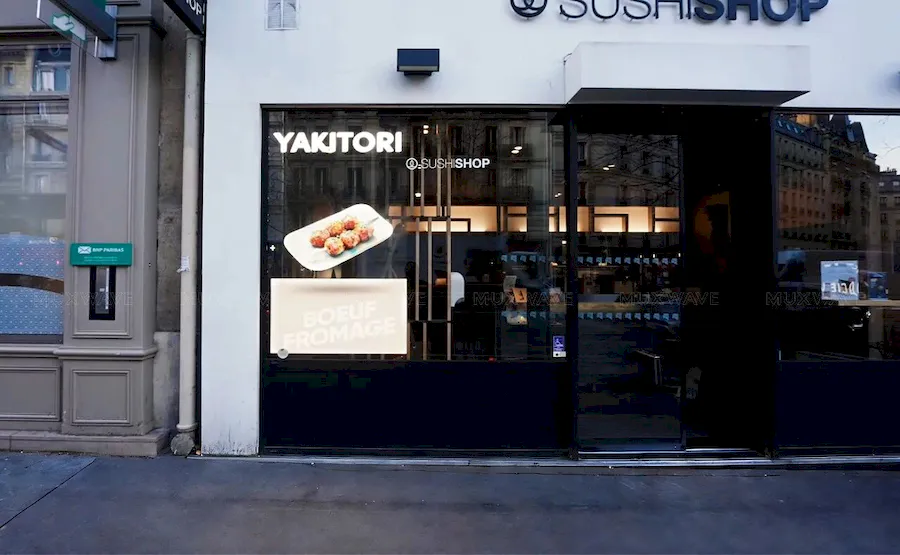
B) Teilweise Abdeckung/Rahmung - Die LED-Anzeige wird als schwebender Rahmen, Banner oder geometrische Form im Fenster positioniert. Auf diese Weise bleibt mehr von der Innensicht erhalten und das traditionelle Schaufenstertableau kann mit dynamischen digitalen Inhalten koexistieren.
Für Visual-Merchandising-Programme, die saisonal rotieren, Oft wird eine partielle Abdeckung bevorzugt, da so die Flexibilität erhalten bleibt, zwischen “volldigitalen” und “produktorientierten” Fenstergeschichten zu wechseln, ohne die Hardware zu entfernen.
3. Welche Inhalte werden Sie tatsächlich veröffentlichen?
Diese Frage klingt offensichtlich, aber viele LED-Projekte im Einzelhandel scheitern genau daran. Transparente LED-Anzeigen verzeihen keine schlechten Inhalte - hier ist der Grund dafür:
- Die Hintergrundhelligkeit eines LED-Bildschirms ist Null (die LEDs sind zwischen den Pixeln ausgeschaltet). Das bedeutet, dass der Inhalt Folgendes verwenden muss dunkle oder schwarze Hintergründe um den Geister-/Schwebeeffekt zu erhalten und eine undurchsichtige Lichtwand zu vermeiden.
- Inhalte mit weißem oder pastellfarbenem Hintergrund verringern die wahrgenommene Transparenz drastisch.
- Bewegte Grafiken, Partikeleffekte und Silhouettenanimationen funktionieren am besten auf transparenten LED.
Inhaltstypen nach visueller Wirksamkeit geordnet:
- ⭐⭐⭐⭐⭐ Schwebende Produktdarstellungen auf schwarzem Hintergrund
- ⭐⭐⭐⭐ Kontrastreiche bewegte Markengrafiken
- ⭐⭐⭐ Abstraktes Video in Schleife mit dunkler Palette
- ⭐⭐ Produkt-Lifestyle-Fotografie (statisch)
- ⭐ Vollbild-Video mit hellen Hintergründen (vermeiden)
? Profi-Tipp: Zusammenarbeit mit Ihrer Content-Agentur vor Fertigstellung der Panel-Spezifikationen. Ein P5.9-Panel mit ausgezeichneten Inhalten mit dunklem Hintergrund wird ein P3.9-Panel mit ausgewaschenem Lifestyle-Material übertreffen.
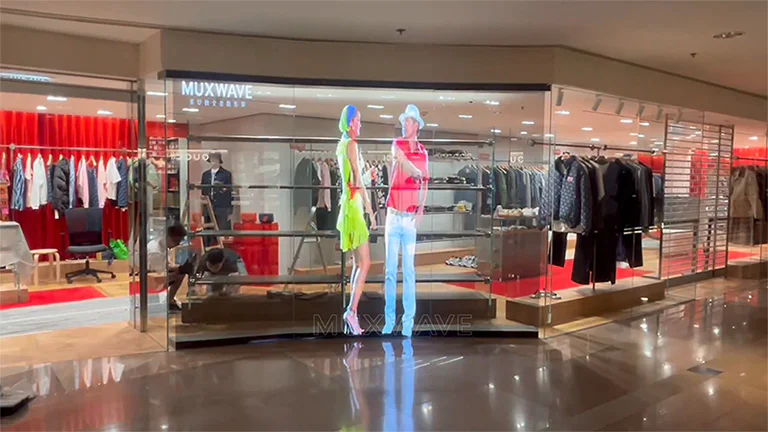
4. Was sind Ihre Installationsbeschränkungen?
Im Gegensatz zu einer herkömmlichen gedruckten Schaufensterdekoration erfordert eine transparente LED-Installation eine elektrische Infrastruktur. Für VM-Teams, die in bestehenden Einzelhandelsräumen arbeiten, sind die wichtigsten Einschränkungen frühzeitig zu erkennen:
- Stromversorgung: Eine standardmäßige 10 m² große transparente LED-Installation verbraucht normalerweise 1-3 kW. Die meisten Einzelhandelsflächen können dies in einem bestehenden Stromkreis unterbringen, aber ältere Gebäude erfordern möglicherweise einen Elektriker, um dies zu beurteilen.
- Befestigungsstruktur: Die meisten transparenten LED-Paneele für den Einzelhandel verwenden einen von oben oder von hinten befestigten Aluminiumrahmen, der am Fensterpfosten oder an der Deckenschiene befestigt wird - eine Bodendurchdringung ist nicht erforderlich.
- Inhaltsverwaltungssystem (CMS): Die meisten transparenten LED-Systeme für Unternehmen umfassen einen mit der Cloud verbundenen Media Player. Vergewissern Sie sich, dass das CMS Ihres Anbieters die Remote-Planung unterstützt - unerlässlich für die Einführung von Einzelhandelslösungen an mehreren Standorten.
- Wärmemanagement: Transparente LED erzeugen aufgrund ihrer offenen Struktur weniger Wärme als massive Paneele, aber eine Belüftung hinter dem Paneel ist bei geschlossenen Fenstern dennoch ratsam.
5. Was ist Ihr realistischer ROI-Zeitplan?
Transparente LED ist eine Kapitalinvestition. Für VM-Budgetverantwortliche gibt es hier einen realistischen Kosten-Nutzen-Rahmen:
Geschätzte Kosten (pro m², installiert):
| Komponente | Ungefähre Kostenspanne |
|---|---|
| Transparentes LED-Panel | USD 800-2,500 /m² |
| Installation und Verkabelung | USD 300-600 /m² |
| CMS-Software (jährlich) | USD 200-800 /Anzeige |
| Produktion von Inhalten (pro saisonale Kampagne) | USD 500-5,000+ |
Zu den dokumentierten Einzelhandelsergebnissen gehören auch diese Kosten:
- +18-35% Zunahme des Fußgängerverkehrs in den Geschäften, wenn animierte Schaufensterauslagen statische ersetzen (Quelle: Einzelhandelsanalysestudien der Industrie)
- Durchschnittliche ROI-Amortisationszeit: 8-18 Monate für hochfrequentierte Standorte
- 60% niedrigere laufende Kosten vs. Neudruck und Installation von saisonalen Fenstergrafiken
- Geringerer Arbeitsaufwand bei der VM-Umstellung - eine saisonale Fensteraktualisierung wird zu einem Upload von Inhalten, nicht zu einer physischen Installation
Für ein Schaufenster eines Flaggschiffs in einer Tier-1-Lage wird in der Regel innerhalb von 12 bis 24 Monaten nach der Installation mit transparenten LED gerechnet.
Die Zusammenarbeit zwischen Architekt und Designer: Wie Sie Ihren LED-Lieferanten informieren
Wenn Sie an einer neuen Ladeneinrichtung oder einer geplanten Renovierung arbeiten, finden Sie hier eine Briefing-Checkliste die Sie mit Ihrem Lieferanten für transparente LED-Anzeigen teilen können:
TRANSPARENTE LED-FENSTERANZEIGE - VM KURZ

Name des Projekts: ___________________________
Geschäftstyp: ___________________________
Abmessungen des Fensters (B × H): ____________
Art der Verglasung: Einscheibensicherheitsglas / Verbundglas / Doppelverglasung
Primärer Betrachtungsabstand: _____________
Zieltransparenz: > ____%
Umgebungsbedingungen: Innen / Halb-Außen / Außen
Bevorzugter Pixelabstand: P3.9 / P5.9 / P7.8 / Andere
Format des Inhalts: 16:9 / Benutzerdefiniertes Seitenverhältnis
CMS-Anforderung: Cloud / Lokal / Integriert mit Marken-CMS
Zeitplan für die Installation: ___________________
Budgetrahmen (USD): ____________________
Wenn Sie diese Informationen im Voraus mitteilen, entfällt 80% das Hin und Her, das LED-Projekte im Einzelhandel normalerweise verzögert.
Warum die holografische, unsichtbare Bildschirmtechnologie das Visual Merchandising weiterbringt
Transparente Standard-LEDs liefern beeindruckende Ergebnisse, aber holografische unsichtbare Bildschirmtechnologie - wie die von MUXWAVE entwickelten Paneele - gehen in dreierlei Hinsicht über dieses Konzept hinaus:
1. Echter Floating-Effekt mit SCM-Chipdesign
Die patentierte Single Chip Module (SCM)-Technologie von MUXWAVE platziert die LED und ihre Treiberschaltung in einer ultraflachen Einheit. Dadurch entfallen die sichtbaren Leiterbahnen, die bei herkömmlichen transparenten LED-Panels auftreten, und es entsteht ein wahrhaft “unsichtbares” Substrat - das Bild scheint in reinem Glas zu schweben.
2. 92-97% Transparenzrate
Während standardmäßige transparente Paneele normalerweise eine Transparenz von 60-75% erreichen, erreichen die holografischen Paneele von MUXWAVE 92-97%. In der Praxis bedeutet dies, dass das Innere Ihres Schaufensters auch bei aktivem Bildschirm vollständig lesbar bleibt - Ihr Styling, Ihre Requisiten und Ihre Hauptprodukte werden nicht beeinträchtigt.
3. 5.000-Nit-Helligkeit für sonnenbeschienene Fenster
Nach Süden oder Westen ausgerichtete Schaufenster sind im Sommer bekanntermaßen eine schwierige Umgebung für Displays. Ein 5.000-Nit-Panel bleibt auch im direkten Sonnenlicht am Nachmittag gut sichtbar - eine Schwelle, die die meisten Konkurrenzprodukte nicht erreichen.
Schnappschuss einer Fallstudie: Wie eine globale Kosmetikmarke ihr Flaggschiff-Fenster umgestaltete
Eine globale Prestige-Schönheitsmarke (Name nicht genannt) hat sich mit MUXWAVE zusammengetan, um das Schaufenster ihres Flaggschiffs an drei Standorten in der Stadt neu zu gestalten. Die Aufgabe: ein 4,2 m × 2,8 m großes Schaufenster zu gestalten, das zeigte das Produkt in Bewegung ohne die physische Ware im Inneren zu verdecken.
Die Lösung wird eingesetzt: Transparente LED-Paneele der Serie MUXWAVE F (P5.9, Transparenz 92%), installiert als vollflächige Glasfrontanzeige.
Inhaltliche Strategie: Schwebende Produkt-“Beauty Shots” - Parfümflaschen und Kosmetika, die in Flüssigkeitsanimationen mit dunklem Hintergrund schweben, um die Aufmerksamkeit auf sich zu ziehen, während die physischen Produkte dahinter sichtbar bleiben.
Ergebnisse nach 3 Monaten:
- 28% Steigerung der Fensterstopprate (gemessen durch Fußgänger-Videoanalyse)
- 22% Erhöhung der Eintrittsrate von Schaufensterpassanten
- Keine baulichen Veränderungen an der bestehenden Einrichtung erforderlich
Praktische Checkliste: Ist Transparent LED das Richtige für Ihr nächstes Fensterprojekt?
✔ Ihr Fenster liegt an einer Fußgängerzone mit mehr als 1.000 Passanten täglich
✔ Sie haben saisonale Kreativkampagnen, die derzeit Kosten für die Druckproduktion verursachen
✔ Ihre Fensterverglasung ist von innen für die Verkabelung zugänglich
✔ Sie haben ein Content-Team (intern oder Agentur), das in der Lage ist, bewegte Grafiken mit dunklem Hintergrund zu produzieren
✔ Ihr Mietvertrag erlaubt nicht-permanente Anzeigegeräte (die meisten transparenten LED-Installationen sind vollständig reversibel)
✔ Ihr Budget für Visual Merchandising erlaubt eine Amortisationszeit von 12-24 Monaten
Wenn Sie vier oder mehr der oben genannten Punkte angekreuzt haben, ist transparente LED wahrscheinlich eine gute Wahl für Ihr Einzelhandelsprogramm.
Häufig gestellte Fragen
F: Können transparente LED-Paneele im Freien verwendet werden?
A: Ja. Transparente LED-Paneele für den Außenbereich entsprechen der Schutzart IP65 (vollständig wetterfest) und sind in Konfigurationen mit hoher Helligkeit (5.000 nits+) erhältlich, die sich für Fassaden, Vordächer und exponierte Schaufensterinstallationen eignen.
F: Wie lange dauert die Installation?
A: Für ein standardmäßiges 10-15 m² großes Schaufenster dauert die Installation normalerweise 1-2 Tage mit einem 2-köpfigen Team. Der größte Teil der Zeit wird für die Verkabelung und die CMS-Konfiguration aufgewendet, nicht für das Panel selbst.
F: Wird der Bildschirm das Fensterglas beschädigen?
A: Nein. Transparente LED-Displays für den Einzelhandel werden mit Hilfe von Aluminiumrahmen oder Hängeschienen montiert, die an vorhandenen Fensterstrukturen befestigt werden. Das Glas wird nicht verändert oder angeklebt.
F: Was passiert, wenn der Bildschirm ausgeschaltet ist?
A: Ein hochwertiges transparentes LED-Panel ist im ausgeschalteten Zustand praktisch unsichtbar - der LED-Abstand bedeutet, dass es aus den meisten Betrachtungsabständen wie klares Glas aussieht. Dies ist ein entscheidender Vorteil gegenüber LCD-Fensterfolien, die auch im ausgeschalteten Zustand einen deutlichen Farbton aufweisen.
F: Welche Inhaltsauflösung benötige ich?
A: Für ein typisches Fenster von 3 m × 2 m bei einem P5,9-Raster beträgt die native Auflösung etwa 508 × 338 Pixel. Das klingt zwar nach einem niedrigen Wert für Monitorstandards, ist aber ausreichend für eindrucksvolle Grafikanimationen und Markenvisualisierung im Einzelhandel. Entwerfen Sie immer für die native Auflösung Ihres spezifischen Panels.
Nächste Schritte für VM- und Design-Fachleute
Transparente LED ist nicht länger eine Technologie, die für Megamarken mit unbegrenzten Investitionsmitteln reserviert ist. Modulare Systeme, Cloud-CMS-Plattformen und zunehmend wettbewerbsfähige Panelpreise bedeuten, dass jede Marke mit einer Präsenz im Einzelhandel kann diese Technologie jetzt zu einem realistischen Preis einsetzen.
Der Schlüssel zu einem erfolgreichen Projekt ist, mit den richtigen Spezifikationen zu beginnen - was bedeutet, dass der Pixelabstand, die Helligkeit und die Inhaltsstrategie aufeinander abgestimmt werden müssen. vor Beschaffung beginnt.
Sind Sie bereit, transparente LED für Ihr nächstes Schaufensterprojekt zu entdecken?
Kontaktieren Sie MUXWAVE, um ein technisches Datenblatt und eine Projektberatung anzufordern →


